TL;DR
|
Pick up almost any tablet box, and somewhere on the packaging you will find the word “waterproof.” It sounds definitive. It sounds reassuring. That is precisely why marketing teams continue to use it.
The reality, however, is that engineers rarely rely on this term at all. There is no regulatory or engineering definition of “waterproof” for electronics, no standardized test, and no defined pass-or-fail threshold.
A manufacturer could apply the label to a device that survives a coffee spill just as easily as one that survives a week fully submerged, and neither claim can be verified without one specific detail: the device’s IP rating.
For organizations specifying a fleet of 20 to 500 devices for a warehouse, a jobsite, or a production floor, understanding that number, along with what it does and doesn’t cover, often determines whether the deployment lasts five years or results in a steady stream of replacement requests.
In this blog, we’ll break down the real difference between water-resistant and waterproof claims, explain exactly how IP ratings are earned, and walk through what the standard test doesn’t account for when you’re choosing hardware for demanding field conditions.
Waterproof vs. Water Resistant: The Honest Definitions
Understanding waterproof vs. water resistant begins with recognizing that these terms describe two very different levels of engineering intent.
Waterproof
In marketing language, the term waterproof generally suggests a stronger level of protection than water resistant. In engineering terms, however, the word carries no independent meaning. No device is permanently immune to water, since factors including pressure, exposure duration, temperature, and seal degradation over time all affect real-world performance.
The only reliable way to compare two devices is to set the marketing language aside and examine the certified rating behind the claim. This is ultimately the fundamental issue at the core of waterproof vs. water-resistant tablet comparisons; where one term reflects a defined, if limited, degree of protection, while the other reflects nothing that can be measured or verified at all.
Water Resistant
Water resistant means a device can tolerate a limited degree of moisture exposure, such as splashes, light rain, or brief incidental contact. Consumer tablets, smartwatches, and earbuds commonly carry this label, and for the purposes they’re designed around, that level of protection is entirely appropriate.
A water-resistant tablet used in an office setting or a retail back room can be expected to perform reliably for years. The important distinction lies in how consumer devices achieve this protection. Manufacturers typically rely on water-repellent nano coatings applied to internal components, adhesive barriers around display assemblies, and minimal port sealing.
These are surface treatments rather than structural design features, and they wear down gradually with regular use; every port insertion, every flex of the chassis, every thermal cycle contributes to degradation that is often invisible to the user.
A consumer device that withstands a splash on its first day in the field may fail under the same conditions fourteen months later, with no indication on the spec sheet that this decline has occurred.
A Quick Guide for How to Read an IP Rating
The IP, or Ingress Protection, code is an international standard defined by the International Electrotechnical Commission under IEC 60529. It provides a measurable framework for rating how well a device resists the intrusion of solid particles and liquids, and unlike marketing claims, it is established through standardized laboratory testing rather than product copywriting.
An IP rating consists of two digits. The first digit indicates protection against solid particles, such as dust and debris, and is rated on a scale from 0 to 6.
The second digit indicates protection against liquids and is rated on a scale from 0 to 9, with a specialized 9K designation reserved for high-pressure, high-temperature applications.
| Rating | Dust | Water | What That Means in Practice |
| IP65 | Dust tight | Low-pressure water jets from any direction | Suitable for rain, splash, and hose down conditions at a distance. This represents the minimum standard for field and warehouse work. |
| IP67 | Dust tight | Immersion to 1m for 30 minutes | Suitable for accidental immersion, such as a device dropped in a puddle, tank, or ditch. |
| IP68 | Dust tight | Continuous immersion beyond 1m (depth and time set by manufacturer) | Suitable for sustained immersion, appropriate for marine, utility, or flood-prone field work. |
| IP66/69K | Dust tight | High pressure, high temperature water jets | Suitable for steam cleaning and chemical washdown environments, such as food, beverage, and pharmaceutical processing. |
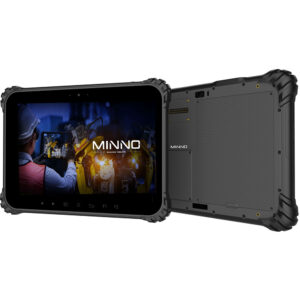
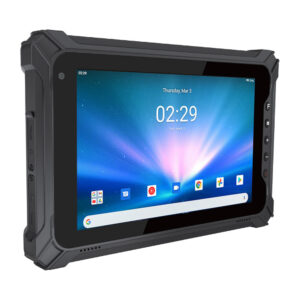
Every Minno tablet carries a certified rating within the IP65 to IP68 range. The Maverick A8Z, for example, carries an IP68 rating. If a device under evaluation does not publish an IP rating at all, its actual level of protection should be considered unknown.
What the IP Test Doesn’t Tell You

This is the section most vendor content overlooks, and it is often where fleet failures actually originate. The IP test itself is conducted under static laboratory conditions: clean, distilled, room-temperature water, applied to a brand-new unit that remains stationary throughout testing.
Real-world operating conditions rarely resemble this scenario.
Thermal Cycling & Condensation
Consider a forklift-mounted tablet that moves repeatedly between a negative 10°C freezer aisle and a humid, sunlit loading dock, potentially twenty times across a single shift. With each transition, the air inside the device housing contracts and expands, creating a pressure differential that can actively draw ambient air past even a well-engineered seal.
That air carries moisture, which then condenses directly onto internal components. The device may never come into contact with a drop of liquid water, yet corrosion begins from the inside. An “IP67 waterproof” rating earned in a still water tank offers no insight into this failure mode.
What does address it is a fan less, fully sealed design built with industrial gaskets engineered specifically for pressure cycling, which is a core reason fully rugged devices are constructed this way, and why cold chain operations should avoid any device with an active fan vent.
Chemical & Heat/Salt Exposure
Standard IP immersion testing uses fresh water only. Caustic cleaning agents, hot detergent washdown, saltwater spray, and petrochemical mist can degrade gasket materials in ways the standard test does not measure.
A device that performs well under immersion testing can still fail within its first month of service in a food processing facility that steam cleans its equipment nightly. That kind of environment calls for an IP66/69K rating, validated specifically against high-pressure, high-temperature jets, housed in a chassis engineered to withstand the chemical exposure involved.
This is why our washdown panel PCs are built with SUS304 stainless steel housings and M12 sealed connectors, and carry NEMA 4X certification alongside their IP66/69K rating.
Drops & Vibration
An IP rating provides no information regarding impact resistance. That falls under a separate standard, MIL-STD-810G, a set of US military test methods covering drop, shock, and vibration resistance. A device can carry an IP68 rating and still fail after a three-foot drop.
For industrial deployment, both certifications are necessary, and both should be clearly published rather than assumed. Across all three of these scenarios, the underlying pattern remains consistent: the IP rating describes performance during a single controlled lab event, while your actual operating environment functions as an interconnected system.
Hardware should be selected with that full system in mind.
Find the Right IP Rating with MinnoWhether you’re deploying 20 devices or 500, our U.S.-based team will help you choose the rugged tablet that fits your environment, so you get the protection you need without paying for features you don’t. |
Match the Rating to the Environment
Once the scope and limitations of IP ratings are understood, selecting the appropriate specification becomes a matter of matching the environment to the correct standard.
| Environment | Minimum Rating | Why | Device Class |
| Office, retail, admin | Consumer water resistance is sufficient | Incidental exposure only | Consumer tablet is genuinely appropriate here |
| Construction, field service, outdoor inspection | IP65 + MIL-STD-810G | Steady rain, dust, and drop exposure | Fully rugged tablet |
| Warehouse, logistics, cold chain | IP65 to IP67, fanless sealed design | Dust, forklift vibration, and freezer to dock thermal cycling | Fully rugged tablet, vehicle mounted |
| Utilities, marine, oil and gas field work | IP67 to IP68 | Immersion risk and sustained exposure | Fully rugged tablet (IP68 class, e.g. Maverick A8Z) |
| Food, beverage, pharma processing | IP66/69K + NEMA 4X | High pressure, high temperature chemical washdown | Stainless steel washdown panel PC |
| Explosive atmospheres (Zone 2) | IP rating + ATEX certification | Ingress protection alone does not provide intrinsic safety | ATEX certified device (e.g. Intrepid W8 [internal link: Intrepid W8 product page]) |
| Government, public sector, defense adjacent deployments | IP65+ and procurement compliance | Federal purchasing requirements often extend beyond durability specifications alone | TAA compliant options [internal link: TAA/government page] |
It is worth noting, particularly regarding hazardous environments, that an IP rating is never a substitute for ATEX or IECEx certification. These certifications measure fundamentally different things, and only one of them is designed to keep a potential spark contained within the enclosure.
The Cost of Choosing the Wrong IP Rating

The cost of a failed device goes far beyond replacing the hardware. When a tablet fails mid-shift, inspections go undocumented, inventory scans are missed, communication breaks down, and IT teams lose valuable time managing emergency replacements and device reconfiguration.
Every hour spent without a functioning device is an hour of lost productivity. The impact varies by industry:
- Construction: Delayed inspections and incomplete documentation.
- Warehousing & Logistics: Disrupted inventory management and shipment tracking.
- Transportation & Fleet: Broken communication between drivers and dispatch.
- Field Service: Missed updates and slower reporting from the field.
Over the life of a deployment, these disruptions add up. While consumer devices in protective cases often require replacement within 8–12 months under industrial conditions, rugged tablets with certified ingress protection are designed to withstand years of demanding use, helping reduce downtime and lower the total cost of ownership.
Find the Rugged Tablet That Fits Your Work Environment with Minno

Choosing the right IP rating is only part of the equation. You also need hardware designed to perform reliably in the environments your teams face every day.
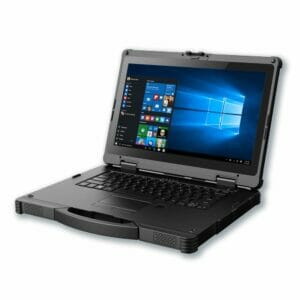
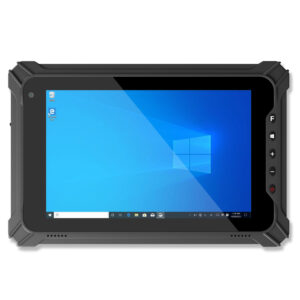
Minno offers rugged Windows and Android tablets engineered for industrial, commercial, education, and government applications. Designed with certified ingress protection, durable construction, and enterprise-ready features, our devices help organizations minimize downtime and maximize long-term value.
Beyond the hardware, Minno provides U.S.-based customer support, helping businesses avoid lengthy overseas repair cycles and get replacement devices back into service faster.
Explore Minno’s rugged tablet lineup or request a custom quote to find the right solution for your business.
Frequently Asked Questions
- Is IP68 always better than IP67?
For immersion depth specifically, yes. For a given operating environment, not necessarily. IP68’s test parameters, including depth and duration, are set by the individual manufacturer, meaning two IP68-rated devices are not automatically equivalent.
Neither rating, moreover, accounts for pressure washdown, which falls under a separate 9K test. The rating should match the actual exposure a device will face, rather than being selected based on the highest available number.
- Does an IP rating cover salt water or cleaning chemicals?
No. IP testing is conducted using clean, fresh water only. Salt, caustic agents, hot detergents, and solvents can degrade seals in ways the standard does not measure. For washdown environments specifically, look for an IP66/69K rating paired with a stainless chassis and NEMA 4X certification.
- Does water resistance wear out over time?
In consumer devices, yes. Coatings and adhesives typically degrade over roughly 12 to 18 months of regular field use, often without any visible indication. In fully rugged devices, protection is built into the structure itself, through gaskets, sealed housings, and reinforced frames, and holds its certified rating for the device’s full service life provided normal maintenance is followed.
- Is MIL-STD-810G the same thing as an IP rating?
No. IP ratings address ingress protection, meaning dust and water resistance. MIL-STD-810G addresses drop, shock, vibration, and broader environmental stress. Industrial deployments typically require both certifications, clearly published on the specification sheet.
- What IP rating is appropriate for a warehouse or cold chain operation?
IP65 represents the minimum standard, with IP67 providing additional margin. That said, the construction of the device often matters more than the rating alone; for freezer-to-dock cycling specifically, a fanless, fully sealed design is essential, since thermal condensation is responsible for more cold chain device failures than direct water exposure.

Minno stands for Mobile Innovation and Value
Minno is a privately held manufacturer of full-featured, high-performance rugged tablets (Android and Windows) and custom-designed or branded tablets for industry, education, and governments sold B2B in volume at prices well below retail brands. Minno rugged tablets are designed for high performance, durability, reliability, and versatility. Our tablets will change how your business operates and deliver value to customers by delivering productivity, efficiency, and business agility.