
In factories, warehouses, construction sites, and field operations, AI is moving from the cloud to the edge.
AI solutions such as visual inspection, predictive maintenance, and real-time diagnostics are happening on the factory floor and in the field now, not by connecting to an LLM in the cloud but by running AI Agents locally on rugged tablets.
If you're comparing a rugged tablet against a mini PC with a webcam, or considering deploying a consumer device, this should change your mind.
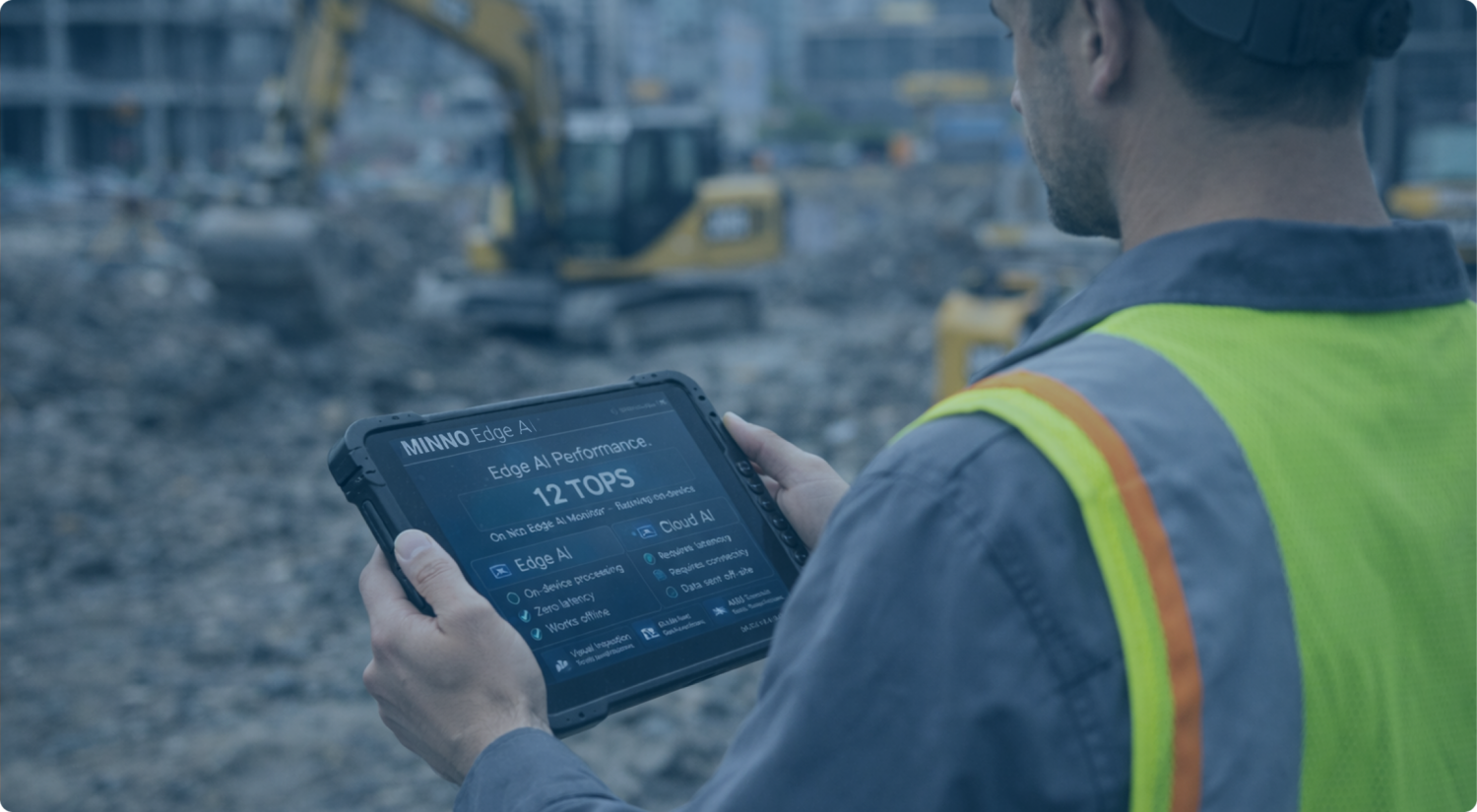
Most Edge AI Should Be In Workers’ Hands Not Mounted on a Wall
Most industrial vision systems today are passive – fixed cameras collecting visual data and sending it somewhere else. An AI-ready rugged tablet changes that completely. It’s mobile, interactive, and processing in real time on the device. Your tech can scan a machine, get AI diagnostics and act on it immediately with or without a connection. A warehouse worker can snap a photo of a potential defect and avoid a problem before it ships (gets much more expensive).
Consumer Tablets Aren’t for Industrial Use
AI workloads require a lot of processing and generate heat. Vision models, predictive maintenance, and real-time inference requires sustained high-performance computing. Consumer tablets aren’t designed for running that hot, particularly outside or in an environment like a 90-degree warehouse.
You’ve probably seen this when leaving your phone in a hot car – thermal throttling kicks in, batteries drain quickly, and the device shuts-down. Nobody’s running YOLO models on their iPad at Starbucks.
Rugged tablets are engineered and built differently. They are efficiently cooled without a fan (to avoid dust and debris getting sucked into the chassis), and they are tested to operate in extreme environments like near industrial ovens or in cold rooms.
Physical Connectivity Matters Too
An Edge AI device needs to communicate with peripheral equipment including PLCs, industrial controllers, robotics. Minno rugged tablets include peripheral connectivity like RJ45 Ethernet, USB-A and USB-C, serial ports, and HDMI. They are purpose-built for industrial I/O. No need for dongles (or duct tape!)
Details People Tend to Forget
Can you operate a separate monitor screen with work gloves on? Can you read it in direct sunlight? Minno tablets use capacitive multi-touch screens that work with gloves, in wet conditions, and hit 500-700+ nits of brightness so they are sunlight readable.
The “DIY Box” Strategy Usually Backfires
We get it – a mini PC plus a webcam looks like a lower cost option, until you deploy it.
A mini PC’s fan pulls in dust. USB connections work loose from vibration. You’re managing multiple pieces of hardware at different endpoints, and when something breaks, you’re troubleshooting each one. Rugged tablets are more reliable: one sealed device, IP65+ rated, fanless, solid-state storage, and vibration protection. There are fewer points of failure, and that means lower cost of ownership over time.
What about Power? Mini PCs need wall power. Consumer tablets don’t have swappable batteries so when they die, work stops. Minno rugged tablets have swappable battery systems so your team can keep working.
Ready For An AI Future
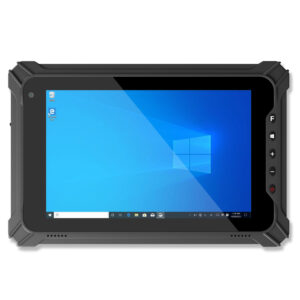
Rugged tablets like Minno’s Maverick A8Z run AI models efficiently and reliably directly on the device (Edge AI).
If you’re deploying AI at the edge, the question isn’t just “what hardware can run the model?” It’s what platform will run the model and survive the worksite, empower your team, and integrate with the systems you already have?”
Give your team the data they need—right where they work.
Featured Products
Ready to grow
with Minno?